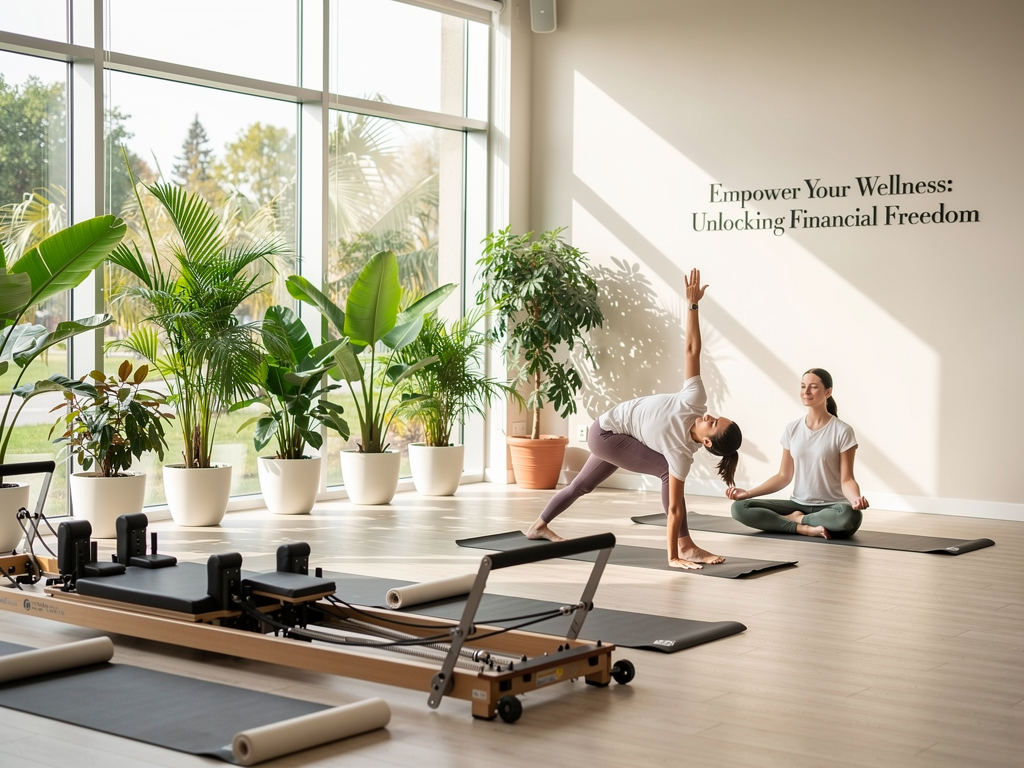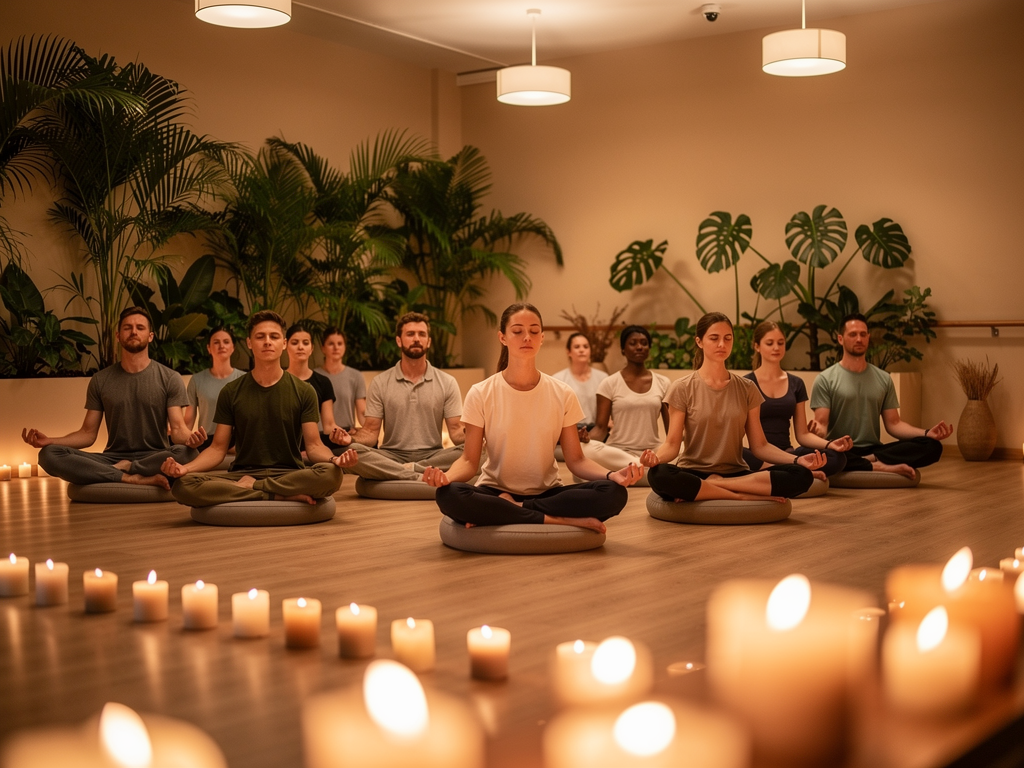
The first time I truly understood mindful movement, I was halfway through my BASI Pilates certification and completely struggling. My instructor asked us to perform a simple pelvic curl — a movement I'd done hundreds of times — but this time, she asked us to feel each vertebra peel off the mat individually. I realized I'd been going through the motions for months without actually being present in my body. That moment changed everything about how I teach at Glow Wellness.
In our fast-paced world, most of us live from the neck up. We're planning, scrolling, problem-solving — disconnected from the body that carries us through it all. Mindful movement is the practice of coming home to yourself through intentional, breath-focused exercise. And the science behind it is as compelling as the experience.
What Exactly Is Mindful Movement, and How Is It Different From Regular Exercise?
Mindful movement is the practice of bringing full, non-judgmental awareness to physical activity. It's about quality over quantity, presence over performance. While conventional exercise often focuses on external metrics — reps, sets, calories burned — mindful movement turns your attention inward to the sensations, breath patterns, and alignment of your body in real time.
Research from Harvard Medical School distinguishes mindful movement from standard exercise by its emphasis on three elements: interoceptive awareness (sensing what's happening inside your body), breath coordination, and present-moment attention. Practices like Pilates, yoga, tai chi, and qigong all fall under this umbrella.
What makes this distinction meaningful isn't just philosophical — it's neurological. A 2022 study published in NeuroImage found that mindful movement practices activate the insular cortex more strongly than conventional exercise. The insula is the brain region responsible for body awareness and emotional processing. Essentially, mindful movement strengthens the neural pathways that help you understand and respond to your body's signals.
At every Glow Wellness event, I begin class by asking everyone to close their eyes and take three slow breaths. I ask them to notice where their body contacts the mat, where they might be holding tension, how their breath feels today. This 60-second ritual shifts the entire room from "workout mode" to "awareness mode," and the quality of movement that follows is visibly different.
Why Is Breath So Important in Movement, and How Should You Breathe During Pilates?
Breath is the bridge between body and mind — and it's the single most underrated tool in any movement practice. In Pilates specifically, we use lateral thoracic breathing: expanding the ribcage sideways and into the back body on the inhale, while maintaining gentle core engagement. This differs from diaphragmatic "belly breathing" used in meditation, and there's a functional reason for it.
Lateral breathing allows you to maintain core stability while still getting full, deep breaths. Each inhale prepares your body for the next movement; each exhale facilitates deeper muscle engagement and spinal articulation. It's a coordination skill that takes practice but becomes second nature with consistency.
The physiological effects are significant. Controlled breathing activates the vagus nerve, which triggers the parasympathetic nervous system — your body's "rest and digest" response. A 2023 systematic review in Breathwork Research Quarterly found that breath-coordinated exercise reduced cortisol levels by an average of 23% compared to the same exercises performed without breath awareness.
During my BASI training, we spent entire workshops on breath alone. My instructor would say, "If you can't breathe through it, you're working too hard." I carry that philosophy into every class. When I see a student holding her breath during a challenging exercise, I know it's time to offer a modification. The breath should never be sacrificed for the movement — it is the movement.
A simple technique I teach at every Glow event: inhale through the nose for a count of four, feeling your ribcage expand laterally like an accordion. Exhale through gently pursed lips for a count of six, feeling your deep core engage naturally. This extended exhale ratio calms the nervous system while strengthening the transverse abdominis — it's multitasking at its finest.
What Are the Mental Health Benefits of Mindful Movement?
The mental health benefits of mindful movement extend well beyond "stress relief," though that alone would be reason enough. Regular practice has been shown to reduce anxiety, improve emotional regulation, enhance sleep quality, and even support cognitive function.
A landmark 2021 study in JAMA Psychiatry found that mind-body exercises were as effective as cognitive behavioral therapy for treating generalized anxiety disorder in adults. The researchers theorized that the interoceptive awareness cultivated through mindful movement helps people recognize and respond to anxiety signals before they escalate into full-blown episodes.
This resonates deeply with what I observe at Glow Wellness events. Many of the women who attend are high-achieving professionals — running businesses, managing teams, balancing family responsibilities. They arrive carrying visible tension in their shoulders and jaw. By the end of a 45-minute Pilates class followed by guided meditation, there's a tangible shift in the room. Shoulders drop, faces soften, and conversation flows more easily during the social portion of our events.
I've experienced this myself during the most stressful periods of building Glow Wellness. There were weeks when the logistics of event planning, vendor coordination, and marketing felt overwhelming. But stepping onto my mat and spending even 20 minutes in mindful movement would reset my entire nervous system. It didn't make the to-do list disappear, but it gave me the clarity and calm to approach it effectively.
The key mechanism appears to be the disruption of rumination — the repetitive negative thought loops that fuel anxiety and depression. When you're fully focused on coordinating breath with movement, feeling the contraction of specific muscles, and maintaining alignment, there's simply no bandwidth left for worry. It's a form of active meditation that many people find more accessible than sitting silently with their thoughts.
How Can You Practice Mindful Movement If You're a Complete Beginner?
Starting a mindful movement practice doesn't require flexibility, fitness, or prior experience. It requires only willingness to slow down and pay attention. Here's a simple framework I share with every first-time attendee at our events:
Begin with a body scan. Before any movement, lie on your back and spend two minutes noticing sensations from your toes to the crown of your head. Where do you feel tension? Weight? Openness? This baseline awareness makes every subsequent movement more intentional.
Start with three exercises, not thirty. Choose three simple movements — a pelvic curl, a cat-cow stretch, and a standing roll-down — and practice them with full attention for 10 minutes. Focus on making each repetition slightly more refined than the last rather than racing through a long routine.
Use breath as your metronome. Let your breath set the pace of movement rather than counting reps. Inhale to prepare, exhale to move. This naturally slows you down and creates a rhythmic quality that feels meditative rather than mechanical.
Practice the "notice, don't judge" principle. When you catch yourself thinking about dinner plans or tomorrow's meeting, simply notice the distraction and return attention to your body. This isn't failure — it's the practice itself. Each return to awareness strengthens your capacity for presence.
End with stillness. After moving, lie still for two minutes and notice how your body feels different from when you began. This integration time is when the nervous system consolidates the benefits of your practice.
How Does Mindful Movement Strengthen the Mind-Body Connection Over Time?
The mind-body connection isn't a vague concept — it's a measurable neurological phenomenon. With consistent practice, mindful movement literally changes your brain. Neuroplasticity research shows that repeated interoceptive awareness thickens the insular cortex and strengthens connections between the prefrontal cortex (decision-making) and the limbic system (emotions).
In practical terms, this means you become better at recognizing your body's signals — not just during exercise, but in everyday life. You notice when stress is building in your shoulders before it becomes a headache. You feel when you're sitting in a way that strains your back. You recognize hunger, fatigue, and emotional states more quickly and respond more appropriately.
After two years of teaching, I've watched this transformation unfold in our community. Women who initially couldn't tell the difference between engaging their core and holding their breath now move with precision and grace. They report being more attuned to their bodies throughout the day — eating when they're actually hungry, resting when they're genuinely tired, and recognizing emotional triggers before reacting impulsively.
This deepened body awareness is perhaps the most valuable gift of mindful movement. It extends far beyond the mat and into every area of life. It's why I believe Pilates combined with meditation — the foundation of every Glow Wellness event — creates lasting change that a purely physical workout cannot.
How Can You Bring Mindfulness Into Everyday Movement?
Mindful movement doesn't end when class is over. Once you develop the skill of present-moment body awareness, you can apply it to anything: walking, cooking, cleaning, even sitting at your desk.
Try this tomorrow morning: when you walk from your car to your office (or your bedroom to your kitchen), notice the sensation of your feet contacting the ground. Feel the weight transfer from heel to toe. Notice your arm swing, your posture, your breath. This 30-second practice transforms an automatic activity into an opportunity for presence.
At Glow Wellness, we call this "carrying your mat with you." The goal isn't to spend your entire day in a state of hyper-awareness — that would be exhausting. The goal is to build the capacity to drop into body awareness whenever you choose, using it as a tool for calm, clarity, and self-care throughout your daily life.
Whether you join us at a pop-up event in South Florida or begin a home practice today, know that mindful movement is available to you right now. No special equipment, no prerequisites, no perfect conditions required. Just you, your breath, and a willingness to pay attention. That's where transformation begins.